
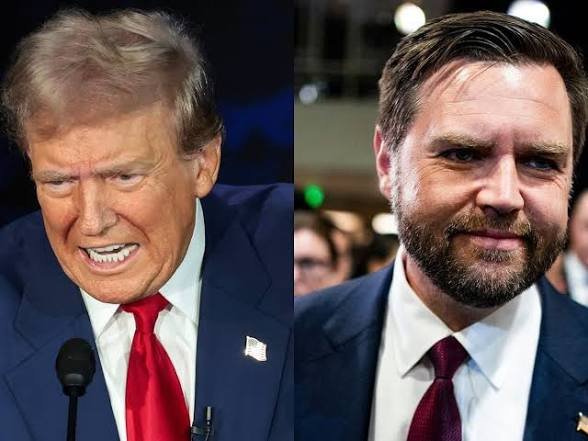
In American politics, words are never merely words. They shape public perceptions, influence political behavior, and can either strengthen the bonds that hold a nation together or deepen the divisions that threaten them. When a claim portraying Haitians as people who eat their neighbors’ pets is repeatedly used as political rhetoric, the consequences extend far beyond a punchline. What some may dismiss as a joke can become a vehicle for prejudice, stigmatization, and the dehumanization of an entire community.
The issue is not whether political figures are entitled to humor, sharp criticism, or provocative speech. They are. The issue is whether those who occupy the highest offices in the country understand the responsibility that accompanies their words. When an unsubstantiated allegation about a particular nationality is amplified on the national stage, it risks transforming an unfounded stereotype into a perceived truth. That is not responsible leadership. It is a dangerous distortion of public discourse that undermines the dignity of the presidency and distracts the country from the substantive challenges confronting its citizens.
A Responsibility That Republican Leadership Cannot Ignore
The gravity of this matter calls for a direct and principled response from the leadership of the Republican Party. We respectfully urge Republican officials, elected representatives, and influential party figures to engage President Donald Trump and encourage him to put an end to this rhetoric once and for all.
This appeal is not about partisan loyalty, political correctness, or an attempt to silence legitimate debate over immigration policy. It is about facts, human dignity, and the standards Americans should expect from their national leaders.
Political parties have a responsibility not only to defend their platforms but also to uphold the integrity of public discourse. When rhetoric unfairly stigmatizes an entire community, party leaders should have the courage to challenge it, regardless of who delivers the message or how politically advantageous silence might appear.
Silence in the face of repeated falsehoods can be interpreted as acquiescence. By failing to correct a narrative that portrays Haitian immigrants as culturally barbaric, Republican leaders risk alienating Haitian Americans, undermining the confidence of immigrant communities, and disappointing Americans across the political spectrum who believe that leadership must be grounded in truth and mutual respect.
A party confident in its principles should have no difficulty distinguishing between a legitimate policy disagreement and a degrading stereotype. Indeed, the ability to make that distinction is a mark of political maturity, not political weakness.
The Facts Must Matter More Than the Stereotype
Let us be clear: there is no credible basis for portraying the consumption of household pets as a Haitian cultural custom. An allegation about individual conduct, even if substantiated in a particular case, cannot reasonably be transformed into a defining characteristic of an entire nationality.
That distinction is fundamental to any fair and rational society.
Haiti is a nation whose history includes the Haitian Revolution, which culminated in independence in 1804 and established the first independent Black republic. Its legacy is inseparable from the universal struggle for freedom, human dignity, and self-determination. Its people have contributed to literature, music, medicine, education, entrepreneurship, public service, and countless other fields around the world.
Haitian Americans, in particular, are an integral part of the American story. They build businesses, educate children, care for patients, serve their communities, pay taxes, and contribute to the country’s economic, cultural, and civic life. Their experiences, political opinions, professions, and personal circumstances are diverse, just as they are within every other national-origin community.
No community should have to prove its humanity by presenting a list of accomplishments. Nevertheless, when stereotypes threaten to overshadow an entire population, it is important to recognize the real people behind the caricature.
Haitian Americans are not defined by an inflammatory political allegation. They are individuals, families, workers, professionals, entrepreneurs, veterans, students, and public servants whose lives cannot be reduced to a derogatory talking point.
We do not claim that any community is beyond criticism or that individual wrongdoing should be excused. We insist on a more basic principle: responsibility must be individual, evidence must matter, and collective condemnation based on nationality has no place in a fair society.
Haitian Americans Are Not a Political Monolith
There is another important dimension to this debate: the diversity of political thought within the Haitian diaspora.
Haitian Americans do not share a single political ideology, nor do they owe their allegiance to one party. Some identify as Republicans, others as Democrats, and still others reject both affiliations. Their political choices reflect personal convictions, economic priorities, religious beliefs, professional experiences, and visions for America’s future.
Many Haitian Americans value entrepreneurship, faith, family responsibility, public safety, economic opportunity, and individual liberty—principles that also resonate deeply within the Republican tradition. Others may prioritize different policies or approaches. Such differences are part of the democratic process.
For this reason, the present appeal should not be mistaken for an attempt to mobilize the Haitian community against the Republican Party. On the contrary, it is an invitation to Republican leadership to demonstrate that the party’s commitment to individual responsibility, patriotism, and equal dignity extends to Haitian Americans as well.
A political movement that seeks broad national support must recognize the humanity of people who may disagree with it, vote differently, or come from different backgrounds. No party should expect the trust of a community while allowing that community’s national identity to become the object of repeated ridicule.
Haitian Americans deserve to be evaluated as individuals, not through the lens of stereotypes. Their contributions should be recognized, their concerns heard, and their political choices respected.
The Presidency Must Stand Above the Punchline
The presidency carries a responsibility that extends beyond the immediate political interests of an administration. The president’s words possess unusual reach and influence. They can reassure a nation in moments of uncertainty, inspire civic participation, and unite people across differences. They can also intensify suspicion, legitimize prejudice, and make vulnerable communities feel unwelcome in the country they call home.
This is precisely why presidential rhetoric matters.
A president need not abandon humor, political combat, or forceful advocacy to exercise restraint and judgment. Nor should every controversial statement automatically become a national crisis. But when a claim repeatedly associates a particular immigrant community with disturbing and degrading behavior without credible evidence of a cultural practice, the appropriate response is not to dismiss every objection as oversensitivity.
It is to examine the facts, acknowledge the harm that sweeping generalizations can cause, and choose a more responsible course.
The dignity of the presidency does not depend on whether every American agrees with the person occupying the office. It depends, in part, on whether the office is exercised with an understanding of the nation’s diversity and the consequences of its immense influence.
The United States is strongest when its leaders defend the right of every community to participate in national life without being reduced to a caricature. That principle should transcend party lines.
An Appeal for Dignity, Not Division
Supported by organizations including DAC, True Patriots, 509, 1791 Group, and PCSC, this appeal is directed to Republican leadership and to all those who believe that public service demands both conviction and character.
We call on party leaders to address this rhetoric directly, encourage a definitive end to the repetition of this degrading allegation, and reaffirm that Haitian Americans deserve the same dignity and fair treatment afforded to every other community in the United States.
We also call on community leaders to respond with facts, discipline, and confidence. The answer to a stereotype should not be another stereotype. The answer to political contempt should not be reciprocal contempt. Our response must demonstrate the very values we ask others to respect: reason, integrity, civic responsibility, and an unwavering commitment to human dignity.
The Haitian diaspora is not asking for special treatment. It is asking for equal treatment. It is not asking to be exempt from political debate. It is asking that political debate be conducted without turning an entire nationality into an object of ridicule.
Ultimately, the question is larger than Haiti, immigration, or partisan politics. It concerns the kind of political culture Americans want to sustain and the standards they expect their leaders to uphold.
Mr. President, the Haitian community is not a punchline. It is part of the American story.
To Republican leaders: the time has come to demonstrate that principle is stronger than partisanship, that truth matters more than provocation, and that national unity is worth defending even when doing so carries a political cost.
The presidency is bigger than any joke, any feud, and any electoral strategy. Its moral authority is strengthened when its occupant recognizes the dignity of all the people affected by its words.
The message should be unmistakable: political disagreement is legitimate; the collective degradation of a community is not. It is time to move beyond the punchline and return to the responsibilities of leadership.
Moise Garcon
Community organizer & Political strategist