
In his February 10, 2026 testimony before the U.S. Senate, Henry T. Wooster framed U.S. involvement in Haiti around “baseline stability”—defined as preventing state collapse and stopping mass migration to U.S. shores.
Security. Armed coalitions. Gang suppression forces. International deployments.
The hearing room heard about aviation assets, weapons systems, and multinational force configurations. Senators nodded at statistics about gang violence. Experts debated the optimal composition of police training missions.
Not a single sentence was spoken about Haiti’s children.
Not one mention of the 9,000 registered schools operating without basic standards. Not a word about teachers who haven’t been paid in months. No discussion of the 34% of Haitian children forced into labor—a statistic buried in Wooster’s own written testimony but absent from the narrative that shaped the hearing.
This omission is not accidental. It is strategic. And it is failing Haiti.
Security Without Schools Is Just Theater
Yes, gangs are destabilizing Haiti. Yes, the violence is real. But insecurity did not begin with guns—it began with systemic neglect that made guns the only visible path to survival.
Walk through any neighborhood where gangs recruit. You will find:
. Teachers showing up to overcrowded rented rooms, working without pay because quitting means watching their students disappear into the streets
· Children sitting through six-hour school days with no meals, no materials, no reason to believe education leads anywhere
· Parents who cannot participate in school life because the walk to campus means crossing gang-controlled intersections
· No enforcement of even the most basic education standards—because the Ministry of Education lacks the resources, the mandate, or both
When a 12-year-old in Port-au-Prince looks at this reality, then looks at a gang recruiter offering food, protection, and belonging—the calculation is not difficult.
Thirty-four percent of Haitian children working is not a labor statistic. It is an education system that has already surrendered.
You cannot militarize your way out of an education collapse. Armed forces cannot rebuild what governance failure has destroyed
Where Is the Money Going?
The testimony speaks of investments. Strategic assistance. Multilateral coordination.
Yet Haitians are watching millions circulate through mechanisms like FAES (Fonds d’Assistance Économique et Sociale) while schools continue to deteriorate.
Here is what accountability would look like:
· Teacher salaries deposited on time, every month, with public verification
· School infrastructure assessed and rebuilt to minimum safety standards
· A national feeding program operating in every registered school, not as a pilot project but as a mandate
· Vocational training pipelines absorbing the thousands of adolescents who have already been pushed out of formal education
· University expansion tied to workforce needs, not political patronage
Where is the public dashboard tracking these investments? Where is the enforceable standard that links international funding to measurable education outcomes?
If the Haitian Department of Education cannot enforce standards across 9,000 registered schools, reform must begin there—not with more armed deployments that treat symptoms while ignoring disease.
The Diaspora Must Confront Its Own Silence
This is uncomfortable. It must be said.
The Haitian diaspora commands political influence in multiple capitals. We hold economic leverage through remittances that sustain millions. We have international visibility that local advocates cannot access.
And yet we have not built a unified, enforceable education reform movement.
We organize conferences. We publish reports. We debate political transitions from Miami, Montreal, and Paris. But we have not collectively demanded:
· Paid teachers as a non-negotiable baseline
· National curriculum enforcement with real consequences for failure
· Trade schools in every department, accessible to every child
· University expansion with transparency and accountability
· Public data showing where every education dollar goes
When we fail to demand education reform for our own children, foreign governments will not respect us. They will continue to fund security operations that make for good press conferences while schools crumble.
Nations respect people who defend their future generation. Education is sovereignty. Full stop.
Stop Politicizing Leadership — Build a Real Ministry
Haiti does not need another transitional council. Another interim president. Another round of political maneuvering disguised as governance.
Haiti needs institutions that function.
Specifically:
· A Ministry of Education with a transparent budget, enforceable standards, and the political backing to actually regulate 9,000 schools
· Measurable standards for every registered school, published annually, with consequences for non-compliance
· A public dashboard tracking education funds from appropriation to classroom impact
· School feeding mandates enforced at the national level, not dependent on NGO pilots
· Teacher salary protections written into law and backed by international oversight if necessary
And yes—representation matters. Haitian women, who hold families and communities together through every crisis, should lead this transformation. Not as symbolic appointments, but as competent, education-centered diplomats and administrators with the authority to rebuild.
Armed Forces Without Education Is an Endless Loop
The Senate testimony outlines police expansion. Military engineering units. Foreign security support. All presented as necessary steps toward stability.
Here is the hard truth that no hearing has yet acknowledged:
If a 12-year-old in Port-au-Prince sees no classroom, no lunch, no teacher stability, no path to university, and no vocational opportunity—then a rifle looks like employment.
That child does not care how many multinational forces are deployed. He cares about eating today. About belonging somewhere. About a future that does not require joining the men with guns who already control his streets.
That cycle will repeat forever—no matter how many forces are deployed—until education offers an alternative.
Haitians Do Not Need Another Report
We are tired of strategic briefings. Stability frameworks. Security assessments. Diplomatic démarches.
We need:
· Teacher payroll reform that ensures every educator is paid
· School infrastructure rebuilding that creates safe learning environments
· National trade certification programs that connect young people to actual economies
· A university expansion mandate that makes higher education accessible beyond Port-au-Prince
· An enforceable education budget floor that no government can raid for other priorities
Stop telling us about preventing migration to U.S. shores.
Tell us how you will prevent children from abandoning classrooms.
Tell us where the education accountability is in every security briefing. Tell us why school feeding is not a line item in every stabilization budget. Tell us why 9,000 unregulated schools are acceptable in 2026.
The Truth Haiti’s Partners Must Face
Haiti’s instability is rooted in governance failure—and governance failure begins where education collapses.
You cannot have functional government without educated citizens who can demand accountability.
You cannot have economic development without skilled workers who can build businesses.
You cannot have lasting security when the only institution offering belonging to adolescents is a gang.
Stop playing with Haiti’s education system.
Redirect the urgency. Fund schools with the same intensity as security operations. Force the Ministry of Education to meet measurable standards. Demand transparency on every dollar allocated through FAES and every other mechanism.
If we do not defend Haitian children’s right to education, no foreign government will do it for us.
Security is temporary.
Education is nation-building.
And Haiti deserves nation-building—not another security cycle that leaves our children behind.
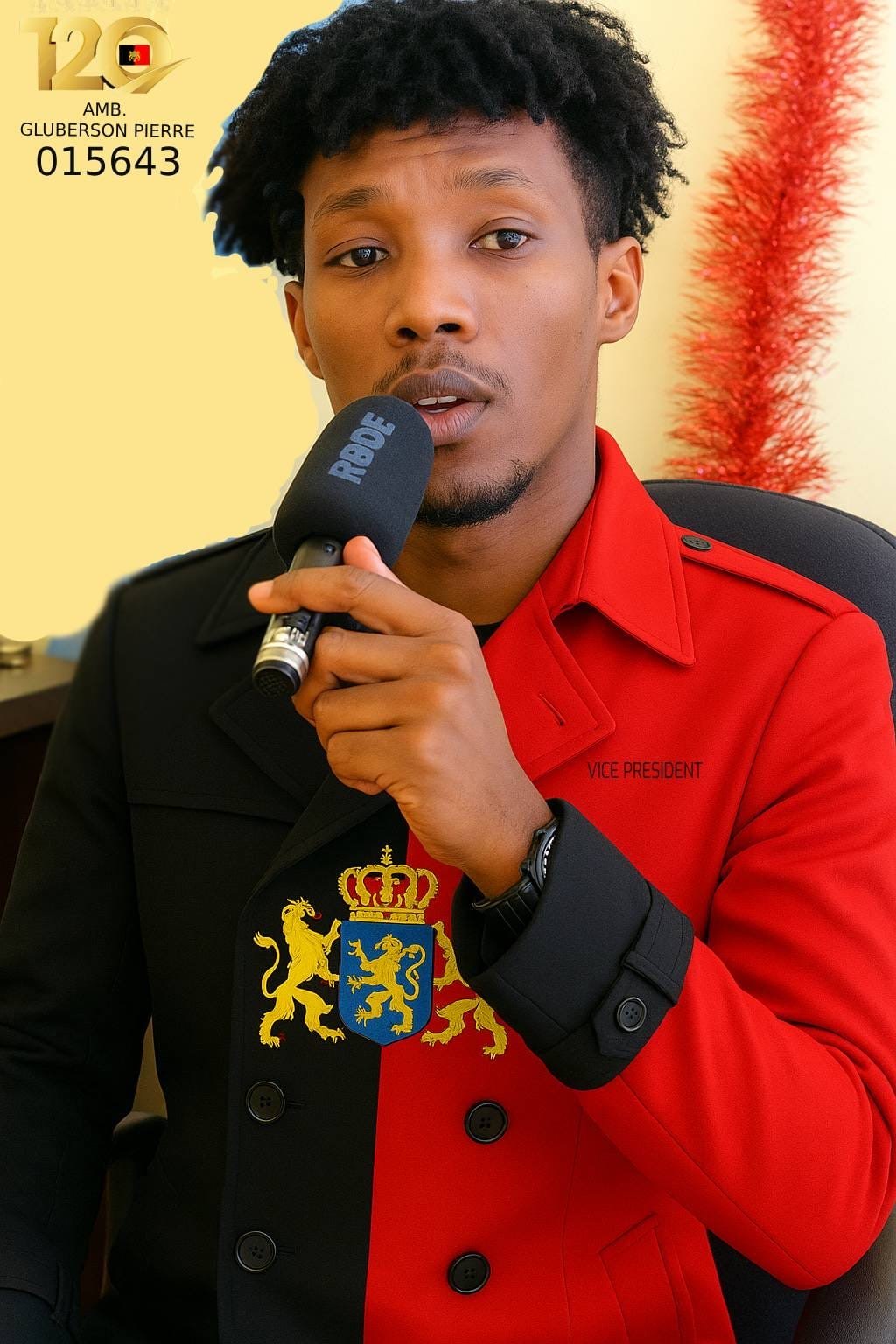
Gluberson Pierre is President of the Konsey Jeunesse Ayisyen Global (Global Haitian Youth Council), advocating for education reform and youth-centered development in Haiti and the diaspora.